Teenage Mutant Ninja Turtles: Out of the Shadows (2016) HD Director : Dave Green. Release : June 1, 2016 Country : China, United States of America, Hong Kong. Production Company : Paramount Pictures, Nickelodeon Movies, Platinum Dunes, 5150 Action, Gama Entertainment Partners. Language : English. Runtime : 112 min. Genre : Fantasy, Action, Adventure, Comedy. ‘Teenage Mutant Ninja Turtles: Out of the Shadows’ is a movie genre Fantasy, was released in June 1, 2016. Dave Green was directed this movie and starring by Megan Fox. This movie tell story about…
Part 2: Asian American Health Issues and Barriers

“Current information about the biological and genetic characteristics of [ethnic minorities] does not explain the health disparities experienced by these groups compared with the white, non-Hispanic population in the United States. These disparities are believed to be the result of the complex interaction among genetic variations, environmental factors, and specific health behaviors.” -Healthy People 2010 (“Asian American Health Research: Baseline Data and Funding” – Chandak Ghosh) Introduction Question: Do you know of any health issues or barriers Asian Americans or other ethnic groups might face? Suggested Reading: Historical Issues and Barriers…
Part 3: Asian American Language Access in Health

“Language access is a basic component of provider-patient communication, health education and promotion, and access to health care programs such as Medicaid, Medicare, and the State Children’s Health Insurance Program.” -Marguerite Ro, Jinny Jihyun Park, Deeana Jang “Language Access” Featured Image Introduction Question: How important is language access in healthcare? Is language access still an issue within the United States? Do you know of any examples of this? Suggested Readings: Language Access for Asian Americans in Health: Trinh-Shevrin, Chau, Nadia Shilpi Islam, and Mariano Jose Rey.Asian American Communities and Health: Context,…
Overview of Asian American LGBTQ+

Course Description: As the Asian American population grows, the need for discourse about the Asian American LGBTQ+ community is imminent. This is an interdisciplinary layout to explore the topic. Objective: 1. Understand and apply queer theory to explore Asian American sexuality 2. Analyze and critique the two films Wedding Banquet and Saving Face Readings: 1. “Influences of Culture on Asian Americans’ Sexuality” by Sumie Okazaki in The Journal of Sex Research (JSTOR) 2. Queer Theory: An Introduction by Anna Marie Jagose, “Introduction” and “Theorising same-sex desire” (pg 1-21) 3. Asian…
Class 1: Wedding Banquet

Readings before class: 1. “Influences of Culture on Asian Americans’ Sexuality” by Sumie Okazaki in The Journal of Sex Research (JSTOR) 2. Queer Theory: An Introduction by Anna Marie Jagose, “Introduction” and “Theorising same-sex desire” (pg 1-21) WATCH MOVIE: WEDDING BANQUET, before or after 3. Asian America : Straitjacket Sexualities : Unbinding Asian American Manhoods in the Movies. “Asian American Manhoods in Hollywood.” (pg 102-110) Discussion Questions: Did you watch the movie before or after reading the excerpt from “Asian American Manhoods in Hollywood”? How do you think it affected your experience?…
Class 2: Saving Face

Reading before class:streaming movie Mad Max: Fury Road 2015 Culturally Responsive Counseling with Asian American Men. “The Face of the Asian American Male Client” (pg 21-23). WATCH SAVING FACE Discussion Questions: How is the idea of “face” incorporated into this film? How does it affect Wil’s relationship with Vivian? How is “face” maintained or affected in a lesbian relationship? Describe possible underlying meanings in the scene where Vivian teaches Wil how to fall without hurting herself. Wil was hesitant to fall at first but immediately did it as Vivian was…
Class 3: Wedding Banquet v. Saving Face
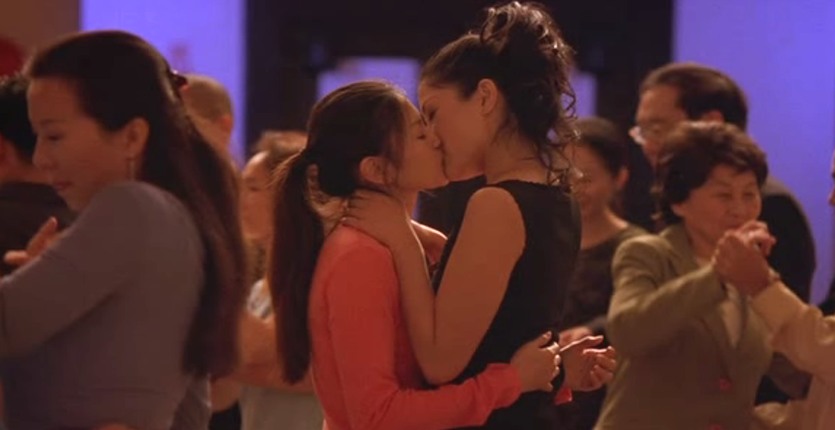
Last class Reading before class: How Movie Critics and Moviegoers View Films Differently Discussion Questions: After reading the excerpt below in mind, critique Wedding Banquet and Saving Face from an average audience member’s perspective then a movie critic’s perspective. An established movie critic views a film from a much different perspective than does the average audience member. First, they are attuned to the critical aspects of cinematography studied in films; they are instead looking for cinematic elements such as proper stage setting (Mise en scène), directing, plot, character development, cinematography,…
Overview of Masculinity Curriculum

This set of lesson plans centers around Asian American masculinity and identity formation. Objectives include seeking answers to the following questions: What role do laws and policies (immigration, labor market, anti-miscegenation) play in the historical construction of Asian American masculinity? What role do discourses, such as the trope of yellow peril, play in the construction of Asian American masculinity? How do Asian American men today engage in various practices in order to construct their own sense of identity and masculinity? What is the relationship between Asian American masculinity and the…
Masculinity Session 1: Discourse in Media

Introduction through new media and pop culture Answer the bulleted questions in discussion among peers or in writing independently. What stereotypes comes to mind when you think about Asian American men and masculinity? Spend about five minutes brainstorming and free-writing about whatever comes to mind. Think about how stereotypes might be beneficial or harmful. How does the media perpetuate such stereotypes about Asian American masculinity? What impact does new media, such as YouTube, have on perceptions of Asian American masculinity? Select two YouTube clips that are created by…
Masculinity Session 2: Historical Context and Origins

The role of immigration policies and practices in the construction of Asian American masculinity Read before class: Shek, Y. S. (2006). Asian American masculinity: A review of the literature. Journal of Men’s Studies, 14(3), 379-391. Asian masculinity has not always been stereotyped as passive and lacking. Consider the below depictions of Asian immigrants as “yellow peril” from the 1800s. Source: Sharp, G. (2014, June 20). Old “yellow peril” anti-Chinese propaganda. The Society Pages. Retrieved from https://thesocietypages.org/socimages How do these images portray Asian (specifically, Chinese) men and…